
302. Elevate Your Language -Elevate Your Life
Yesterday, I attended a philosophy group in Barnes and I have enjoyed not only what I heard but the way people spoke - a wonderful choice of words and Received Pronunciation.
It got me thinking about language and how it transforms experience.
You may have the right thoughts, the right ambition, even the right strategy—but if your delivery lacks clarity and control, it dilutes your impact.
Choice of words, accent, pacing, and tone all contribute to perceived credibility. Like it or not, people associate certain speech patterns with composure, education, and authority.
This is why Received Pronunciation (RP)—often associated with the British upper classes—has historically carried weight. Not because it is “better,” but because it signals:
Clarity
Control
Intentional delivery
It doesn’t rush. It doesn’t blur. It doesn’t apologise.
Elevated speech is not about sounding louder or more formal. It’s about being deliberate.
Instead of:
Rushing through words
Softening statements unnecessarily
Filling space with uncertainty
You begin to:
Articulate clearly
Pause with confidence
Deliver thoughts with structure
Get Rid of your Accent app will help develop clear, composed speech rooted in RP—not to erase who you are, but to elevate how you’re perceived.
Here's how it works:
Elevated language → stronger presence; stronger presence → better opportunities; better opportunities → a different life trajectory
Warmly
Olga Smith
285. Accent myth: Adults can’t change their accent
Most students who come to our elocution courses and take elocution lessons are adults aged 30–65.
Almost all of them ask the same question:
“Is it possible at my age to change my accent?”
The short answer is yes.
In fact, 99% of our students are highly motivated, which is a key factor in their success. With our method and their dedication, they achieve remarkable results. Their speech becomes clear and easy to understand, and their accent becomes neutral, making it difficult for others to identify where they originally come from.
They are no longer placed in a box: French, German, Russian, or another nationality simply based on how they speak.
Many students later tell us that they wish they had started this process years earlier. They often explain that before coming to us, they had tried different tutors and courses, but the results were minimal.
At BATCS Global, we combine professional elocution training with specialised learning apps to help students practise every day, which is essential for lasting change.
So why do many accent reduction attempts fail?
From our experience working with adult learners, there are two common reasons why accent training does not produce results.
1. An Unqualified Tutor
Accent training requires specialised knowledge. Only a trained phonetician understands how sounds are formed in the mouth and how to correct pronunciation effectively.
A general English tutor usually has limited training in phonetics and pronunciation mechanics.
Other professionals focus on different areas:
Speech therapists specialise in correcting speech disorders and problems with speech organs.
Voice coaches focus on voice projection and vocal quality.
While both professions are valuable, their training is not focused on accent reduction. Nevertheless, speech therapists and voice coaches sometimes promise accent improvement, which often leads to disappointing results.
Accent reduction requires phonetic expertise, structured exercises, and a proven methodology.
2. Irregular and Insufficient Practice
Even with an excellent teacher, success depends on consistent practice.
Accent training works best when students practise every day using targeted exercises. Regular repetition trains the muscles involved in speech and helps build new pronunciation habits.
This is why we developed a range of specialised video courses, iOS and Android training apps that allow students to practise anywhere and reinforce what they learn during lessons.
Three apps to master all the sounds of Received Pronunciation:
An accompanying video course for these three apps: Get Rid of your Accent Part One
One app to master intonation, sentence stress, fluency and connoceted speech patterns:
An accompanying video course for these three apps: Get Rid of your Accent Part Two
One app to master public speaking skills
American English Speech Apps
For learners who want to master American pronunciation, we offer:
Accent-Specific Training Apps
Some learners need targeted help with pronunciation patterns typical of certain languages. For this purpose, we developed:
These apps focus on correcting the most common pronunciation challenges for speakers of those languages.
The Key to Success
Changing your accent as an adult is absolutely possible. What it requires is:
Expert phonetic guidance
Structured exercises
Daily practice
With the right method, consistent effort, and the support of tools such as the training programmes and apps developed by BATCS Global, adults can achieve clear, confident, and neutral English speech.
Many of our students tell us the same thing after completing their training:
“I only wish I had started sooner.”
Ready to Transform Your Speech?
If you want to change the way you speak English and reduce your accent, the most important step is to start with a professional speech analysis.
At BATCS Global, we offer students an individual speech analysis that identifies the exact pronunciation patterns affecting their speech. During this process, our trained phoneticians analyse:
how you produce individual sounds
stress and rhythm patterns
intonation and speech melody
pronunciation habits and speech patterns influenced by your native language
This detailed assessment allows us to create a personalised training plan targeting only the sounds and speech patterns that need correction. You will get a written report.
Because the training becomes precise and focused, students typically achieve results up to 80% faster compared with general pronunciation practice or traditional language lessons.
Instead of guessing what to improve, you will know exactly what to work on and how to practise effectively.
Combined with our structured lessons and specialised pronunciation apps, this approach helps learners achieve results very fast.
Take the first step today. Visit batcsglobal.com and book your individual speech analysis with BATCS Global to start transforming the way you speak.
Olga Smith
262. iOS Apps to Master English Speech
This article will help you choose the best apps to master Received Pronunciation, clear articulation, expressive voice modulation, and the strategic use of pauses. These core speaking skills are essential for public speakers and professionals who use English as a second language and want to sound confident, polished, and persuasive.
All the apps featured share powerful, user-friendly functionality. You can listen to expertly recorded audio by professional actors, record your own voice, and instantly compare your pronunciation with the model, making progress measurable and motivating.
British English:
Elocution Lessons. This app is ideal for children and people who have just started learning English. This app has 48 lessons. It contains short, commonly used phrases, sentences and verses that are easy to repeat, and it also has useful tips for teachers of English. It is actually useful for everyone as it contains essential, everyday English.
Get Rid of your Accent. This app is ideal if you want to get rid of a regional or foreign accent and to speak with Standard English or RP (Received Pronunciation). It has 42 lessons; it contains effective practical exercises to perfect all English sounds and perfect your articulation.
Fluent English Speech. This app is a follow-up to the Get Rid of your Accent app. It is ideal if you want to develop fluency in English and sound more like a native English speaker. It contains exercises for difficult and connected speech patterns, natural flow of speech, intonation, sentence stress and onomatopoeia.
Business English Speech. This app was designed for top-level professionals, diplomats and lawyers. It is the only app on the market that has both English pronunciation and business vocabulary training. It contains 43 lessons with material gathered from interviews with CEOs, CFOs and MDs of global companies and helps to develop proficiency in English.
4Ps, Power, Pitch, Pace, Pause. This app is ideal if you want to get rid of monotonous speech and become a successful presenter and public speaker. It contains practical exercises for voice modulation and the use of pauses.
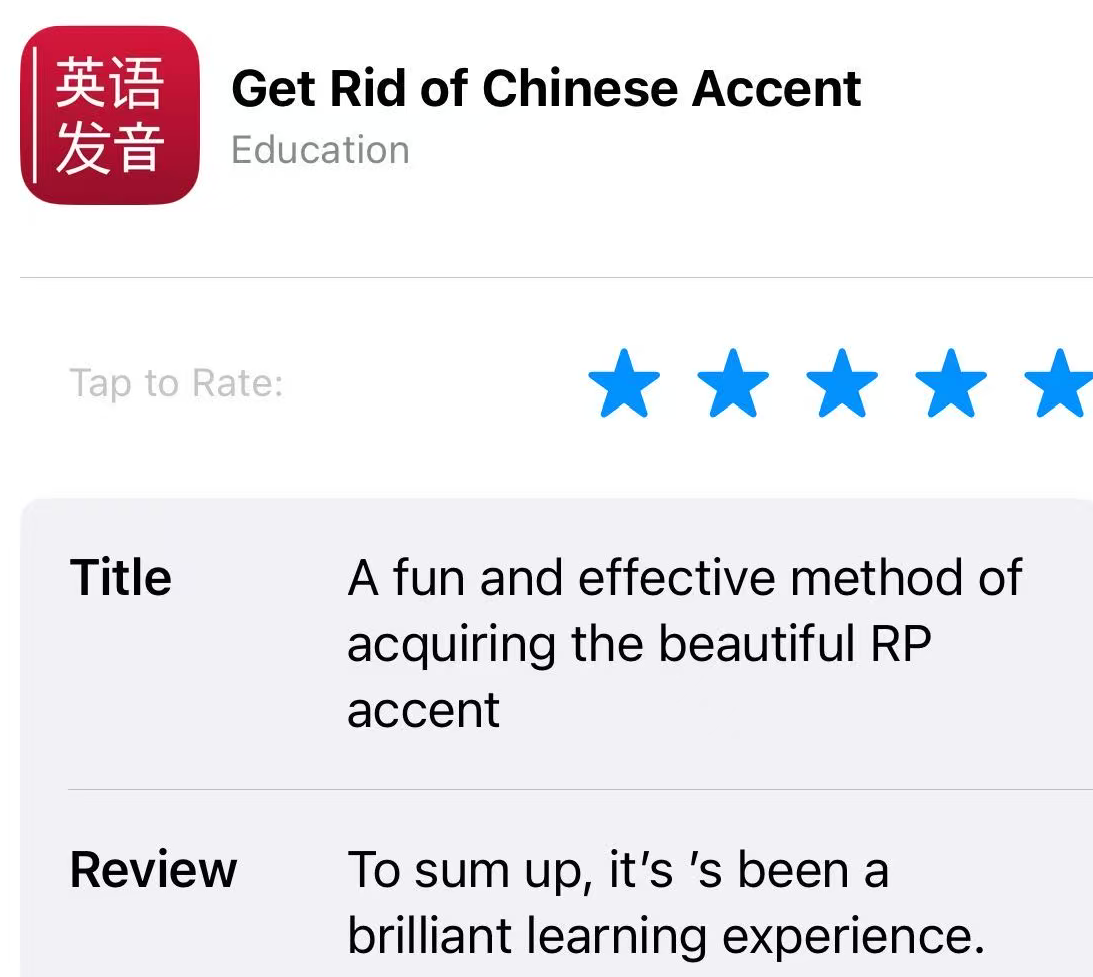
Get rid of Chinese Accent. This app is the same as the app Get Rid of your Accent, with an additional bonus - Chinese translations.
Get Rid of Russian Accent. This app is the same as the app Get Rid of your Accent, with an additional bonus - Russian translations.
General American English:
American Accent App. This app is ideal if you want to get rid of a foreign or regional accent and master the Standard American accent. It has 42 lessons. It contains effective, practical exercises to perfect all American English sounds.
Fluent American Speech. This app is a follow-up to the American Accent App. It is ideal to develop fluency in your American English speech. It contains exercises for difficult and connected speech patterns, natural flow of speech, intonation and sentence stress
More on www.batcsglobal.com
235. The Power of Three
Have you noticed how often the power of three shows up in our daily lives? A good meal consists of a starter, a main course, and a dessert. A good day includes work, rest, and play.
Take my belly dancing class today. It felt amazing because it had:
1️⃣ A nice warm-up
2️⃣ A well-paced rehearsal of our routine for the upcoming show
3️⃣ A wonderfully relaxing stretch to finish
The same principle applies to public speaking. A strong speech always has:
1️⃣ An engaging introduction
2️⃣ An interesting main part
3️⃣ A memorable conclusion
And yes, even in elocution lessons, the pattern holds true:
1️⃣ Warm-up muscular exercises
2️⃣ Practising a sound or speech pattern
3️⃣ A fun verse or rhyme exercise at the end
Why does this work? Because our brains love structure. Three feels complete, balanced, and easy to remember. If you’d like to apply the power of three to your own speech and communication, you can explore my apps:
Now, I’d love to hear from you. What’s an example of the power of three in your own life? Share it in the comments—I can’t wait to read your ideas
232. Overcoming the Fear of Speaking English in Public
Speaking English in public can feel intimidating, even for people who have studied the language for years. The fear of making mistakes, being misunderstood, or sounding “different” is common—but the good news is that it can be managed and overcome with the right mindset and practical techniques.
Why We Fear Public Speaking in English
There are several reasons why speaking English in front of others can feel scary:
1. Fear of Mistakes
Worrying about mispronunciation or grammar errors can make you hesitant to speak at all.
2. Lack of Confidence
Not being sure about your vocabulary or fluency can make public speaking stressful.
3. High Expectations
Many people compare themselves to native speakers and feel pressure to “sound perfect.”
Understanding the cause of your fear is the first step to addressing it.
Practical Steps to Build Confidence
Here are some strategies that can help you speak more confidently in English, whether in meetings, presentations, or social situations:
1. Start Small
Practice speaking English in low-pressure situations—like ordering a meal, speaking with friends, or reading out loud at home. Small wins help build confidence gradually.
2. Focus on Clarity, Not Perfection
Instead of worrying about sounding like a native speaker, aim to be clear and understandable. Your audience values clarity more than perfect pronunciation.
3. Use Pauses Effectively
Pausing after each idea gives you time to think and reduces nervousness. Practising Power, Pitch, Pace, Pause (4Ps) can make your speech more natural and easier to follow.
4. Record and Listen to Yourself
Recording your voice and listening back allows you to notice your strengths and areas for improvement. Apps like Get Rid of Your Accent or Fluent English Speech provide guided exercises for intonation, articulation, and fluency, making this process easier.
5. Practice Public Speaking Gradually
Start with a small audience, then gradually increase the number of listeners. Toastmasters, online language meetups, or even speaking to family members can help you practice in a supportive environment.
Mindset Matters
Remember, everyone makes mistakes, even native speakers. Mistakes are part of the learning process and do not define your ability to communicate effectively. Celebrate your uniqnes and your progress, no matter how small, and be patient with yourself.
Final Thought
Overcoming the fear of speaking English in public takes practice, patience, and perseverance. Start small, focus on clarity, and gradually challenge yourself. With consistent effort, you’ll progress and feel proud of your progress.
Useful Tip
Incorporate a few minutes of daily practice with guided exercises from apps like Get Rid of Your Accent or Fluent English Speech—you’ll be amazed at how quickly your confidence grows.
More on www.batcsglobal.com
231. Get Rid of Russian Accent
This app is designed especially for Russian speakers who want to reduce their accent and speak clear, confident English. Based on the bestselling series Get Rid of Your Accent, it combines proven elocution lessons with step-by-step practice. All speech organ positions are translated into Russian, making it easy for learners to master English sounds and correct pronunciation quickly.
Why It Works
Trusted by actors, diplomats, teachers, and business professionals, this accent app helps you:
Understand how each English sound is formed with Russian explanations
Practise pronunciation, articulation and intonation
Master all sounds of Received Pronunciation (RP) – also called Queen’s English, Oxford English, or BBC English
Improve fluency for public speaking and everyday conversation
App Content
48 lessons with words, phrases, short sentences, verses, and articulation drills, tongue twisters, rhythmic exercises, and passages
Audio recordings of native English speakers for accurate English pronunciation
Functionality
Listen & Repeat– copy pronunciation, liaisons, and intonation
Record & Compare – hear your voice and track your progress
With regular practice, you will:
• Neutralise your Russian accent within 1–3 months
• Speak English that is clear and easy to understand
• Gain confidence for teaching, studying, or working internationally
• Sound professional and fluent in English communication
Meet the Authors
Linda James (RAM, Dip. Ed., IPD, LRAM), Speech and Drama coach, trained at the Royal Academy of Music, with 20+ years of experience teaching RP and accent reduction in London drama schools, films, and TV.
Olga Smith (BA Linguistics, MBA), Linguist, public speaker, and co-author of the best-selling *Get Rid of Your Accent book series. Having overcome her own strong Russian accent, Olga brings practical expertise to learners worldwide.
Visit www.batcsglobal.com to book a professional speech analysis.
230. Elocution Lessons App
Elocution Lessons App – Accent Reduction Made Easy. Perfect for children, beginners, and anyone starting their English pronunciation mastery.
Content
This app contains all 48 lessons from the bestselling book Get Rid of Your Accent for Beginners, the latest in the acclaimed Get Rid of Your Accent series. It provides a complete solution for accent reduction and speech study, designed especially for children and beginner-level English learners.
Practice English sounds in words, phrases, sentences, and passages
Fun verses, rhythmic drills & articulation exercises
Carefully selected vocabulary for beginners and young learners
Functionality
Listen & Repeat – Hear model pronunciation for every sound.
Record & Compare – Match your voice against native RP speakers.
CD Function
What You’ll Learn
Master all English sounds of RP (Received Pronunciation), also known as Oxford English, Queen’s English, or BBC English
Clear articulation through consonant clusters and word endings
Natural intonation and sentence stress
Fluency through linking and speaking in phrases
Customers reviews:
“This is a great tool for correcting my pronunciation of common phrases. The app makes practice much easier than CDs.” – Alan Perez, Amazon customer
“As a teacher, this helped me reduce my accent and deliver clearer lessons. Highly recommended.” – Amazon customer
Meet the Authors
Linda James (RAM, Dip. Ed., IPD, LRAM), Speech and Drama coach, trained at the Royal Academy of Music, with 20+ years of experience teaching RP and accent reduction in London drama schools, films, and TV.
Olga Smith (BA Linguistics, MBA), Linguist, public speaker, and co-author of the best-selling *Get Rid of Your Accent book series. Having overcome her own strong Russian accent, Olga brings practical expertise to learners worldwide.
Visit www.batcsglobal.com to book a professional speech analysis.
227. Online Accent Reduction Course for Professionals
Start with a proven system designed to help you communicate clearly and confidently in business settings.
⭐Step 1: Practise professional English vocabulary with a clear British accent
Get Rid of your Accent Part One (Video Course)
👉 Develop clear pronunciation and good articulation of business terms
🚀Step 2: Sound more natural and fluent
Fluent English Speech (App)
Get Rid of your Accent Part Two (Video Course)
👉 Improve intonation, sentence stress and fluency - sound more like a native speaker
Why This Course?
The most complete resource for Business English speech training; includes 43 lessons built on real business language
Written in the style of the Financial Times and The Economist
Covers finance, IT, law, HR, and marketing vocabulary
Used by professionals worldwide to advance their careers
Many of our clients have been promoted after improving their speech clarity and business communication with this app and lessons
The Method of Learning
Begin with the video course to see how sounds are formed in the mouth
Follow up with practice using our app
Focus on one lesson at a time
Practice for 10–45 minutes per day
Continue for three consecutive days
Move on to the next lesson after three days
Key Features
🪞👄Watch the video for and copy the speech organ positions with the mirror
🎧 Listen & Repeat – Hear model pronunciation for every sound
🎤 Record & Compare – Match your voice against native speakers
💿 CD Function – Optional audio practice
225. Fluent English Speech App
The follow-up to the bestselling Get Rid of Your Accent UK1 app. Designed for learners who want to speak English fluently, clearly, and confidently—just like a native speaker.
App Contents
Part 1: Master difficult speech patterns — word endings, consonant clusters, schwa, strong & weak forms.
Part 2: Connected speech — learn to speak in natural phrases instead of separate words.
Part 3: Improve intonation, sentence stress & rhythm — make your speech smooth, clear, and engaging.
Functionality
1. Native model audio tracks
2. Listen & repeat training
3. Record your voice
4. Compare pronunciation instantly
With this app, you will:
Develop English fluency and natural flow
Improve pronunciation, intonation & rhythm
Learn idioms & colloquial expressions to sound authentic
Reduce your foreign accent and speak with confidence
Boost career opportunities and personal impact through clear communication
Meet the Authors
Linda James (RAM, Dip. Ed., IPD, LRAM), Speech and Drama coach, trained at the Royal Academy of Music, with 20+ years of experience teaching RP and accent reduction in London drama schools, films, and TV.
Olga Smith (BA Linguistics, MBA), Linguist, public speaker, and co-author of the best-selling *Get Rid of Your Accent book series. Having overcome her own strong Russian accent, Olga brings practical expertise to learners worldwide.
Visit www.batcsglobal.com to book a professional speech analysis.
223. How Chinese Can Become Even More Successful
I have many Chinese friends and colleagues. What I have noticed about them all is how hard-working and goal-oriented they are. There is also one thing almost all of them had in common: they struggled with English pronunciation.
The 6 biggest challenges for Chinese speakers of English:
1. Final consonants (e.g., pound, sound, found)
2. /t, d/ endings in past tense (learned, hoped)
3. /l/ vs. /r/ sounds (London vs. rat)
4. Fricatives /θ/, /ð/, /f/, /v/ (think, that, fake, victory)
5. Diphthongs like /au/ (cow, pound)
6. Intonation, connected speech, and sentence stress
Our Recommendations
Start with consonants, then move to vowels and diphthongs.
Practise using our apps: Elocution Lessons, Get Rid of Chinese Accent, and Business English Speech (available on App Store & Google Play).
Combine with the video course, Get Rid of Chinese Accent
Once sounds are clear, focus on intonation and fluency using the video course Get Rid of your Accent Part Two and the app Fluent English Speech app.
My business partner from Silicon Valley told me that many Chinese IT specialists working there earn peanuts because it's difficult to understand their English. He further specified: they are making $100k now, but if they changed their accent, they would make $400.
More on www.batcsglobal.com
219. How to Reduce Your Accent in 3 Months or Less
Why Accent Reduction Can Be a Game-Changer
If you speak English as a second language, you might have noticed that sometimes people ask you to repeat yourself — not because your ideas aren’t good, but because your words aren’t clear. In professional settings, this can be frustrating and even limit your opportunities.
The good news? You don’t need years of training to make a noticeable difference. With the right tools and consistent practice, you can reduce your accent and speak English clearly in as little as three months.
Step 1: Understand How Accent Reduction Works
Accent reduction isn’t about erasing your identity — it’s about making your speech easier to understand. This means:
· Correct pronunciation of English sounds
· Clear word stress and intonation
· Proper pace, pauses, and projection
Step 2: Use a Structured Accent Training Program
Random YouTube videos can help, but a structured accent reduction app like Get Rid of Your Accent gives you:
· Step-by-step lessons for all English sounds
· Audio models from native speakers
· Record & compare tools to track progress
Step 3: Practice Daily for 15–20 Minutes
Just like going to the gym, you’ll see results if you train regularly. Focus on:
1. Repeating words, sentences and verses after the model
2. Recording yourself and spotting mistakes
3. Practising fluency in social phrases
Step 4: Apply Your New Skills in Real Conversations
Start using your improved pronunciation in meetings, networking events, or even casual chats with friends. The more you speak, the faster you’ll internalise your new habits.
The Bottom Line
A heavy accent doesn’t have to hold you back. With consistent practice and the right guidance, you can sound clearer, more confident, and more professional — in just three months.
Start your transformation today with the Get Rid of Your Accent app — your personal accent reduction coach, right in your pocket.
218. The Role of Voice and Accent in Job Interviews
When it comes to landing your dream job, most people focus on polishing their résumé, practising common interview questions, and researching the company. But there’s another factor that plays a huge role in how you’re perceived — your voice and accent.
In a job interview, your words matter — but how you say them can matter even more.
Why Your Voice Matters
Your voice is more than just a tool for communication — it’s part of your personal brand. The tone, pace, and clarity of your speech can instantly influence whether you come across as confident, competent, and trustworthy.
Here’s what interviewers often pick up on:
1. Clarity – Clear speech signals professionalism and attention to detail.
2. Confidence – A steady, well-projected voice makes you sound self-assured.
3. Energy – A lively tone helps you sound engaged and interested in the role.
A nervous, rushed, or monotone delivery can unintentionally send the wrong message — even if your answers are perfect.
Accent and First Impressions
In today’s global job market, accents are normal — but they can still affect comprehension. If an interviewer struggles to understand you, they might (consciously or unconsciously) question your ability to communicate effectively with clients, colleagues, or stakeholders.
This doesn’t mean you need to erase your accent entirely. But reducing a heavy accent and improving pronunciation can make your speech easier to follow, helping you connect with your interviewer and keep their focus on your skills and ideas — not on deciphering your words.
Key Skills to Improve Before Your Interview
If you want to make a strong vocal impression, focus on these areas:
1. Pronunciation – Aim for crisp, accurate sounds, especially for common industry terms.
2. Pace – Slow enough to be clear, but not so slow that you lose momentum.
3. Pausing – Use pauses to emphasize key points and give the interviewer time to process.
4. Intonation – Add variety to your pitch to sound natural and engaging.
5. Volume & Projection – Speak loudly enough to be heard without sounding aggressive.
How to Train Your Voice for Interview Success
Improving your voice and accent doesn’t have to take years — with targeted practice, you can make noticeable changes in just weeks.
Get Rid of Your Accent for Business app provides:
Audio models of clear, neutral English speech.
Step-by-step lessons to improve pronunciation and intonation.
Record & compare tools to track your progress.
Practice materials based on real-world speaking situations, including interviews.
By training your ear, practising key sounds, and mastering vocal techniques, you can walk into your interview sounding confident, professional, and easy to understand.
Your qualifications get you in the door, but your communication skills can seal the deal. A clear, confident voice helps interviewers focus on you — your ideas, your expertise, and your potential.
Ready to sound your best in your next interview?
Start training today with the Get Rid of Your Accent for Business app — your personal voice coach, right in your pocket.
209. 7 features of the British Accent
There are over two hundred accents and dialects in Britain: Southern (RP), Northern, Scottish, Cockney, etc. RP or Received Pronunciation is taught to foreigners because it is understood around the world and is called Standard English. RP is also a compulsory accent for actors to learn in British drama schools. RP is associated with high class and good education, and many learn RP to blend in with the upper classes.
I am an expert in RP, and in this article, I will share my knowledge that will help you learn to speak with RP, the most popular British accent and avoid main pronunciation mistakes. Below are the main characteristics and patterns of the British accent.
1. Pure English vowels
There are five long and seven short pure English vowels. Each vowel has a specific speech organ position. Lean on long vowels; do not shorten them. It's important to mention that the meaning of the word may change if you shorten a long vowel. For example, if you don't pronounce long [i:] in the word "sheet" people will hear another word, "shit". Spend extra time to make sure your vowels are precise.
Pay extra attention to the long [a:] sound as in “dance”. In some American and Northern English, this sound is substituted by [æ] as in “cat”. Read my article about the [a:] sound.
2. Crisp articulation
English consonants are crisp, which makes the British accent very clear and precise.I recommend doing articulation exercises regularly. Crisp articulation is important for those who speak on the phone and deliver public speeches. The best app to train articulation is Get Rid of your Accent
3. [t, d, l, n] sounds
In RP, [t, d, l, n] are pronounced with the tip of the tongue touching the alveolar ridge. It helps to train your tongue. If the tongue is much lower, that creates a harsh "dental" sound.
In the Cockney accent, [t] sounds are substituted by a glottal stop in the middle of the word, for example, “water, later”. That makes speech hard to understand for those who are not used to hearing Cockney. In American English, [t, d] sounds in the middle of the word are substituted by the fast [d] sound.
4. Word endings [t, d. s, z]
It is important to pronounce [t, d. s, z] sounds at the end of the word in the past tense of verbs and the 3rd person singular. For example, Spanish speakers find it hard to pronounce [t] and [d] sounds at the end of the word, and that might create an impact that they don't know basic grammar, but it could be just a pronunciation mistake.
5. Spelling and pronunciation are not identical
English inherited foreign words from Latin, French, Dutch, and German. They kept the original spelling but anglicised the pronunciation.
One sound can have several spelling variations. Below are a few examples:
- The [a:] sound as in “father” can be spelt with “er” in words “Derby, clerk, sergeant”
- The [f] sound is usually spelt with “f” in words “ fake, fix, frame”, but it can also be spelt with “gh” in words “laugh, tough” or with “ph” in words “phone, philosophy”
- The [ʌ] sound as in “duck” can be spelt with "o" in words “oven, front, company”, or with “u” in words “bus, lunch, pub” and with “ou” in words “ country, double, trouble”.
6. Silent letters
Many letters are silent in English. For example:
- silent [w] in words “write, who, whimsical, wholesale”
- silent [l] in words “walk, talk, chalk”
-silent [h] in words “why, when, where”
7. The usage of the schwa [ə] as in “the” for speech fluency
The schwa is used to make the speech more fluent because many unstressed syllables and even unimportant words are pronounced with the schwa. For example, in the phrases “fish and chips, ”a cup of tea”, the schwa is highlighted.
It is used in contracting unimportant words for the meaning of the sentence or phrases.
More on www.batcsglobal.com
190. Get Rid of Japanese Accent
We had many students from Japan and the main reason why their speech was difficult to understand is that they had bad articulation. What can they do to make their English clear?
We have identified six areas of English speech which are particularly difficult for them:
1. There are long and short vowels in English, in Japanese, all vowels have the same length.
2. They have difficulty pronouncing English diphthongs and they separate the two vowels in a diphthong.
3. English consonants are crisp and well-articulated. Japanese speakers of English often do not make a distinction between /l/ and /r/, /b/ and /v/, /n/ and /m/.
4. In good English speech, pronouncing/t/ and /d/ and /s/ and /z/ endings is important. Japanese often do not pronounce them at all.
5. They often separate words and do not know how to speak in a connected way and use liaisons.
6. Their intonation patterns are quite different from English and they often stress wrong syllables and words.
What can we recommend to overcome the difficulties mentioned above?
1. When learning English words, practice them with the correct pronunciation. Most online dictionaries and Google Translate offer the sound version of a word. A more advanced step would be to memorise the phonetic symbols of English sounds.
2. Practise pure English long and short vowels and diphthongs. Pay attention to word stress.
3. Do articulation exercises every day for 2-5 minutes. It takes time and effort to build your speech organs muscles for English consonants.
We suggest that you practise English vowels and consonants with the apps Elocution Lessons and Get Rid of your Accent and the accompanying video course Get Rid of your Accent Part 1. In all these apps, there is a link in “How to use this app” to the page: the difficult sounds typical for your nationality. Click on Japanese to work effectively with a more focused approach
4. Practise word endings, liaisons and sentence stress with the app Fluent English Speech and the accompanying video course Get rid of your Accent Part 2. The same apps are also available on Google Play. They are based on bestselling books in the series Get Rid of your Accent. Here, you will master all English sounds and intonation. The functionality is ideal: read, listen, record and compare your speech with the model. The apps have mouth diagrams to help you create the correct speech organ positions in words,
To get the best results we recommend that you book a few elocution lessons
188. Teaching Received Pronunciation to kids
We are often approached by parents who would like their children to speak with RP. Received Pronunciation (RP), the standard accent of British English which is characterised by clear and precise articulation and other qualities.
RP is an accent taught for many decades since the BBC popularised it and many know it as BBC English. In the past, it was called Queen’s English and Oxford English. RP is the accent that boys learn very quickly in schools like Eton if they do not want to be mocked for their regional sounds. Clearly, RP is associated with the quality of one's education and a certain social and economic position. It is interesting to note that a study revealed, that the more refined the RP of a person the higher their social status and the better their economic situation. No wonder that parents would like their kids with regional or foreign accents to master RP.
Parents complain to us that their kids pick up bad habits that make their speech difficult lazy and difficult to understand. Some parents tell us that they want their kids to blend in with kids who already speak with RP which they developed in their families and private schools.
Below are a few things to consider.
1. First of all let's talk about the ideal age to start learning RP. 11 years old is the earliest age to start learning RP. If you begin too early your child might find it too technical and boring.
2. Secondly, lessons should be light-hearted and last no longer than 45 minutes. Do not bore the kids with too much theory and technical explanations.
3. We recommend lots of rhythmic and articulation exercises. Specifically for children we have published a book and an app based on RP:
Get Rid of your Accent for Beginners (book)
Elocution Lessons (app)
The book and accompanying app contain plenty of short phrases, sentences, poems and verses. Your child would enjoy learning to speak RP with them. They will master all sounds of English and intonation. The functionality is ideal: read, listen, record and compare your speech with the model. All our apps and books contain 10% theory and 90% practice.
More on www.batcsglobal.com
181. Should I learn to speak with an American or British accent?
I have mastered the British accent spoken by the upper classes in Britain. It is called Received Pronunciation (RP).
Then I went to the USA, New York and researched American accents. What I have found out is that the most sophisticated General American accent is close to British RP.
I personally prefer British RP as it is regarded in the world more, but if you plan to live in the USA then I recommend that you master the General American accent. When I was in an airport restaurant in New York and asked the waiter to bring me a fork, he could not understand me as I pronounced it in the British way. In the word “fork” Americans always pronounce the /r/ sounds whilst in British RP it is not pronounced. Also in the long vowels /ɑː/ as “car” and /ɜː/ as in “Sir”, and in the three diphthongs /eə/ as in “pair”, /ɪə/ as in “ear”, and /ʊə/ as in “sure” the ruling applies.
Another point is that British English is more crisp because in RP consonants are well articulated. For example, in the American accent where the /t/ sound is between two vowel sounds as in “later” is pronounced as a fast /d/, in British RP it is a well-articulated /t/ sound.
I have developed and published apps for both British RP and General American pronunciation.
You can master which one you need with the apps Elocution Lessons, Get Rid of your Accent UK1, Business English Speech and Fluent English Speech (British English) or American Accent App and Fluent American Speech (American English). There are also two accompanying video courses: Get Rid of your Accent Part 1 and Get rid of your Accent Part 2.
The same apps are also available on Google Play. They are based on the bestselling books in the series Get Rid of your Accent and have audio and recording buttons.
172. Who's more eloquent Stephen Fry or Russell Brand?
Stephen Fry is more eloquent. Russell Brand is very witty but he has speech inadequacies, he does not know how to articulate the /r/ sound as in ”red”; he produces this sound using lips and pronounces /w/ instead of /r/. He would say “wed, wed woses” instead of “red, red roses”.
Speech organs position for the English /r/ sound:
The tip of the tongue curls back slightly in the roof of the mouth, just behind the alveolar ridge, and the breath squeezes past whilst the tongue is still and not vibrating.
There are other pronunciations of the letter "r" or sound /r/:
In other languages, the letter "r" is pronounced differently from English.
For example, the French vibrate the tongue towards the back of the mouth.
Russians, however slightly vibrate the tip of the tongue very quickly as the breath passes through.
In our experience of teaching speech, the English /r/sound is particularly difficult for Japanese and Chinese students. They often pronounce the /r/ sound using their lips and the result is the /r/ sound replaced with a /w/. Russell Brand does the same.
Tips to pronounce the /r/ sound correctly:
· Do not vibrate your tongue, keep your tongue still
· Do not use the lips to pronounce /r/
· Practice lesson 41 and articulation tongue exercises with our apps Get Rid of your Accent UK1, Elocution Lessons and Business English Speech.
171. How effective are the accent reduction training programs?
The effectiveness of accent reduction training depends on three key factors:
1. The teacher’s expertise and experience
2. The student’s listening skills, consistency, and commitment
3. The quality of learning materials — books, apps, and video courses
Choosing the Right Teacher
Accent reduction should be taught by a qualified speech tutor (traditionally called an elocution teacher). A skilled tutor understands how sounds are formed — the exact tongue, lip, and jaw positions for each sound. This detailed knowledge makes all the difference. To get the best results, book a few elocution lessons with a qualified professional who can guide you through the process step by step.
What’s Expected from the Student
Accent reduction is a process - it’s about replacing old speech habits with new ones. And just like any habit change, it takes time, consistency, and effort. We usually recommend mastering one sound per week. Some sounds are easy; others need more focused work.
For example, the /w/ sound doesn’t exist in Russian. It’s produced with tightly rounded lips — almost like a whistle — and requires certain muscles. If those muscles aren’t trained, it may take time to build strength and control.
Think of it like the gym
You wouldn’t expect a six-pack after one workout - the same goes for clear speech. Aim for 15–45 minutes of daily practice, rather than two hours once a week.
How to Practice — Recommended Apps & Resources
For British English:
Elocution Lessons App (for essential English)
Business English Speech App (for business vocabulary)
For American English:
Accompanying video courses:
Pro tip: Listen to good RP (Received Pronunciation) speakers, repeat short sections, and record yourself to track progress.
More on www.batcsglobal.com
166. Voiced and unvoiced sounds in English
It is very important to distinguish between voiced and unvoiced sounds in English due to two reasons:
To be aware of the difference
To be understood
All vowels and diphthongs are voiced.
Unvoiced sounds are easier to pronounce because they are made with breath only:
[s] soup, [p] pick, [t] tick, [k] kick, [tʃ] church., [ʃ] shoe, [f] fan, [θ] think.
When pronouncing voiced sounds extra effort is required because they are made with vibrations of vocal cords: [z] zoo, [b] bubble, [d] dog, [g] giggle, [dʒ] George, [ʒ] rouge, [v] van, [ð] that, [l] lock, [m] meter, [n] nun, [ŋ] king.
Because an extra effort is required, many students substitute voiced consonants with their unvoiced partners, particularly at the end of the word. Moreover, in some languages, for example, German and Russian it is not a pronunciation mistake to substitute a voiced consonant with its unvoiced partner: “dog” may sound like “dok”, or “bed” like “bet”. In English, as you can see from these examples, the meaning of the word changes if you do not observe voiced consonants.
In English, plurals and past tense are identified by word endings.
Rule: If the sound before the ending is unvoiced, then the ending will be unvoiced too. If the sound before the ending is voiced, then the ending will be voiced.:
Plurals: cats /s/, kicks /s/, dogs /z/, beds /z/
Past tense: kicked /t/, picked /t/, begged /d/, dragged /d/
It is rather difficult to pronounce consonants at the end of the word in English for some nationalities such as Spanish and Chinese. They tend not to pronounce the ending at all. This creates an impression that they do not know English grammar, namely how to create plurals and past tense. Because of that, their speech may sound uneducated.
We recommend practicing voiced and unvoiced consonants with the apps Get Rid of your Accent UK1 and Fluent English Speech (British English) or American Accent App and Fluent American Speech (American English) and book a couple of elocution lessons.
More on www.batcsglobal.com
164. Be in control and exude authority
Good barristers, politicians and business leaders sound confident, in control and have authority in their speech and voice. Can it be mastered? Yes, and I will explain how.
First of all, in order to achieve authority in your voice be in control of your breathing. Good breath control will bring energy to your voice.
Secondly, good articulation will help you sound clear, more energised and powerful. You can master it with the apps Get Rid of your Accent UK1 (British English) or American Accent App (American English).
Thirdly, avoid sounding monotonous and saying everything on one level of pitch. Change the pitch, power and pace according to the emotion/meaning of a particular message. We can recommend the app 4Ps, Power, Pitch, Pace, Pause if you want to learn and practice this technique.
To achieve authority, speak in a straightforward way and stress the key messages. To make the keywords stand out use a louder or quieter voice (depending on the meaning). Raise the inflection when saying keywords and vice versa, use downward inflection with unstressed words. Learn more about inflecltion and sentence stress in the apps Fluent English Speech (British English) or Fluent American Speech (American English).
Finally, think about physicality and be well in control of your posture and gestures. Have a good straight posture and gestures that support your messages.
What is the best way to practice it? Listen to speakers like Winston Churchill. Watch courtroom dramas and note how effective barristers speak. Here is a practical exercise for you:
Read a speech out loud and record yourself.
Underline stresses keywords and mark pauses in the printed copy of the speech. You can learn how to do it right with the app Power, Pitch, Pace, Pause.
Read the speech again and record yourself. If necessary repeat this exercise a few times.
If you need help book a few elocution lessons.
More on www.batcsglobal.com